
We implement ERP and enterprise software platforms for large organisations across mining, finance, retail, and wholesale. We work across SAP and Oracle product portfolios — from core ERP to HR, procurement, and analytics — and build custom software where standard platforms do not cover specific requirements.
We implement enterprise platforms end to end — from scoping and configuration through data migration, integration with existing systems, and post-go-live support. We work across SAP and Oracle product families and build custom extensions where standard platforms do not cover specific requirements.
Full-cycle ERP deployment — business process design, system configuration, testing, and go-live.
Structured extraction, cleansing, and load from legacy systems with validation at every stage.
ERP connected to banking platforms, operational systems, and third-party applications.
Post-deployment support and knowledge transfer so client teams operate the system independently.
We work across the SAP and Oracle product portfolios. The platform recommended for each engagement is based on the organisation's size, complexity, and operational requirements.
Next-generation ERP for large enterprises. Covers finance, procurement, supply chain, manufacturing, and operations on a single in-memory platform.
ERP for small and mid-size enterprises. Covers financials, sales, purchasing, inventory, and operations in a single integrated system.
Cloud-based human capital management — covering recruitment, onboarding, performance management, learning, and payroll.
End-to-end procurement and supply chain collaboration — sourcing, contract management, purchasing, and supplier management.
Enterprise cloud ERP covering financial management, procurement, project management, and risk and compliance. Suited for large and complex organisations requiring a fully cloud-native platform with strong multi-entity and regulatory reporting capability.
Cloud ERP for growing mid-market organisations. Covers financials, inventory, order management, and CRM in a unified cloud platform. Well suited for multi-entity and multi-currency operations with a need for rapid deployment.
Web-based internal management systems, operational dashboards, and administration portals — built for specific business functions that ERP does not cover out of the box. Role-based access, workflow integration, and connection to existing data sources.
Automated approval flows, notification systems, and task routing for procurement, finance, HR, and operations. Configured to the organisation's authorisation structure and integrated with the ERP for data consistency.
Custom modules that extend ERP functionality for industry-specific requirements — costing engines, document templates, custom reporting modules, and calculation tools that integrate natively with the core platform.
API and file-based integration between ERP platforms, banking systems, customs portals, third-party applications, and operational databases. Built where native connectors do not exist or do not meet the organisation's specific data requirements.
Self-service portals for suppliers to submit invoices, track orders, and manage documentation — and for customers to access account information, statements, and pricing without manual handling and email-based communication.
Mobile-compatible applications for field operations, remote data capture, asset inspection, and operational checklists — integrated with core systems so data flows without manual re-entry at the office.
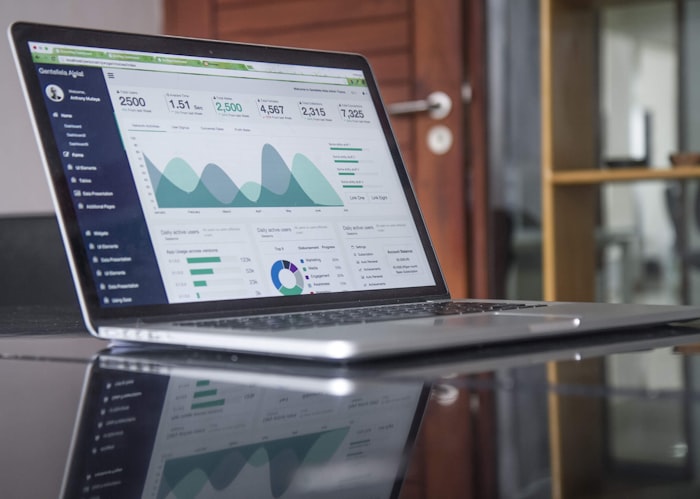
Role-based dashboards connected directly to ERP and operational data sources — financial position, procurement status, inventory levels, and KPIs — updated automatically without manual report runs. Configured for executive, management, and departmental users.
Structured reporting frameworks aligned to board, management, audit, and regulatory requirements. Financial reporting packs, procurement analysis, and compliance outputs — built from ERP data and formatted for the intended audience with scheduled automated distribution.
Organisations with data spread across ERP, spreadsheets, operational databases, and third-party platforms need it consolidated before it can be analysed. We build the extraction and consolidation pipelines, standardise the data, and maintain automated refresh schedules.
Procurement spend visibility across categories, suppliers, and business units. Supplier performance tracking, contract compliance monitoring, and buying pattern analysis — giving procurement teams the information needed to negotiate effectively and reduce cost leakage.
Budget versus actual analysis across cost centres, projects, and business units. Variance explanations, trend analysis, and rolling forecast support — structured to give finance teams and management early visibility of deviations before they become significant problems.
Structured analytical work for specific management decisions — investment cases, operational reviews, performance benchmarking, and scenario analysis. Delivered as structured reports or interactive models depending on the decision being supported.
We implement enterprise systems across the following sectors. Each industry has specific operational and compliance requirements that determine platform and configuration choices.
Mining operations require integrated asset management, procurement, contractor management, and cost control across multiple sites. ERP platforms must handle high procurement volumes, fleet and equipment maintenance, and project cost tracking.
Financial institutions require platforms that handle complex accounting structures, regulatory reporting, and multi-entity consolidation. HR and payroll systems must integrate with core banking and comply with local labour regulations.
High-volume trading businesses need real-time inventory visibility, integrated purchasing and accounts payable, and accurate margin reporting across product lines and locations. Stock management and supplier integration are typically the priority.